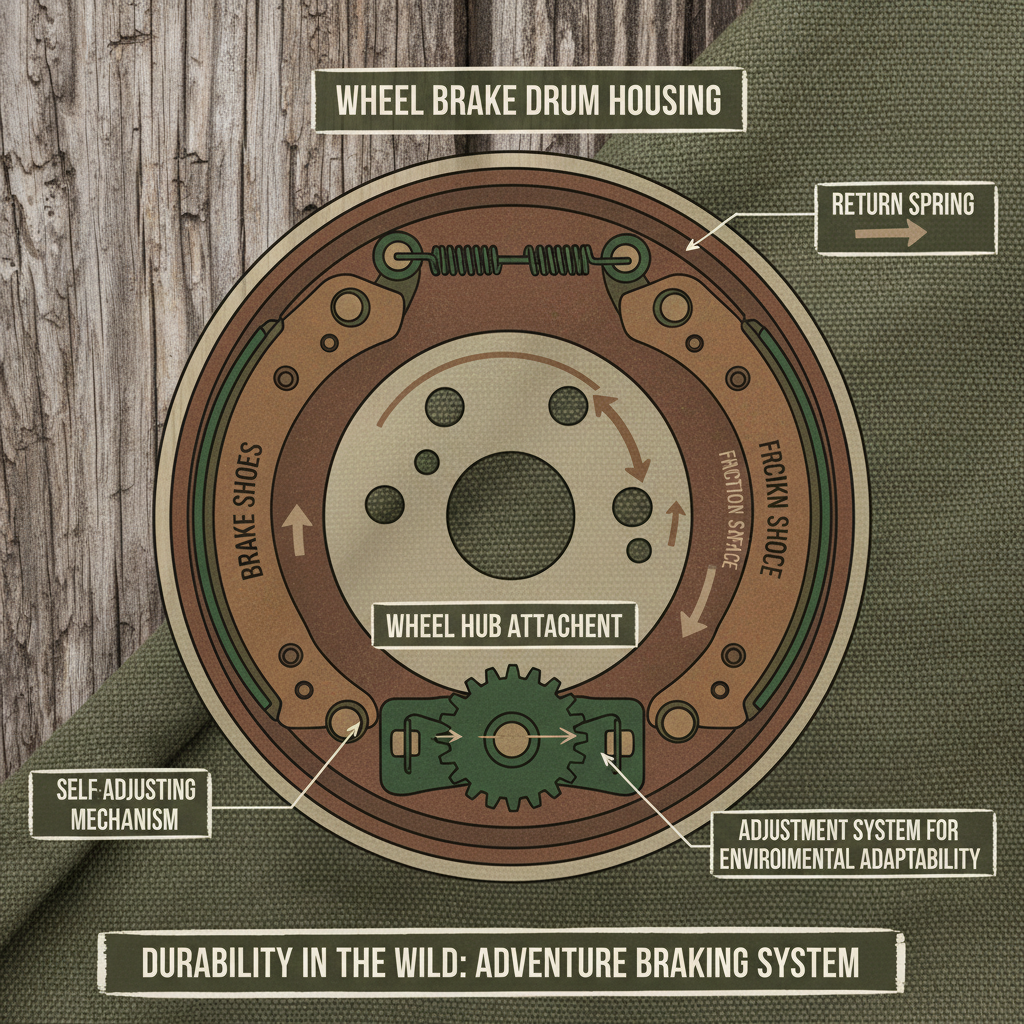
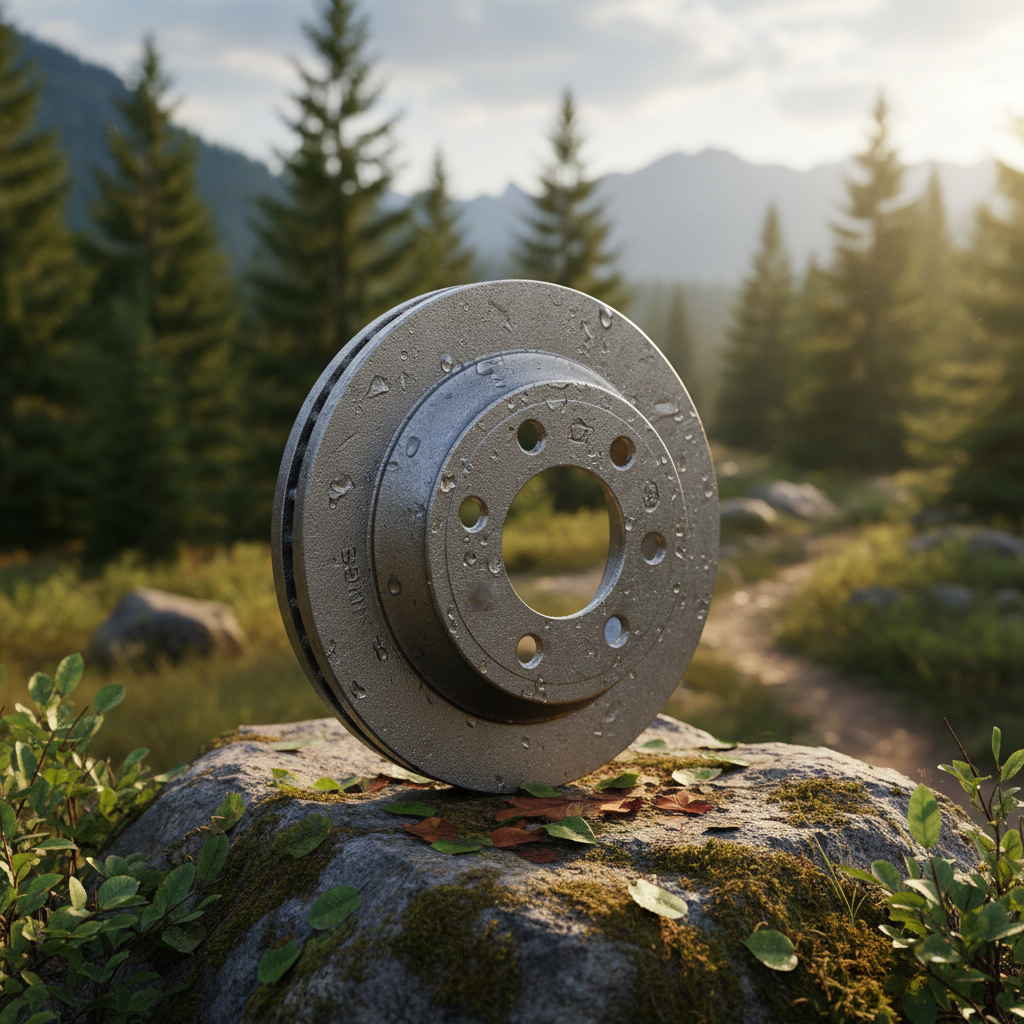
When maintaining a vintage-style motorcycle or a modern retro bike, the braking system's integrity is paramount for rider safety. Among the various components, the rear brake drum serves as the critical friction surface that converts kinetic energy into heat to slow the vehicle.
For owners and fleet managers, understanding the classic 350 rear brake drum price involves more than just looking at a price tag; it requires an analysis of material quality, casting precision, and wear resistance. The market offers a spectrum of options from basic replacements to high-performance industrial-grade drums.
This report examines the technical variables that influence the cost of rear brake drums and provides a selection framework for those seeking a balance between budget and long-term durability.


The durability of a brake drum is primarily decided by the casting process and the alloy composition. In the metal tools and general equipment manufacturing sector, the use of high-carbon cast iron is standard because it provides an ideal balance of thermal conductivity and hardness.
Poorly cast drums often suffer from "hot spots"—areas of uneven thickness or material density that lead to warping under extreme heat. Professional manufacturers, such as Longyao County Yihang Machinery Manufacturing Co. Ltd, utilize state-of-the-art production facilities to ensure that every drum meets stringent precision standards, reducing the risk of vibration and premature wear.
Stopping power in a drum system is a function of the friction coefficient between the brake shoe and the inner surface of the drum. The surface finish of the drum must be smooth enough to prevent "grabbing" but porous enough to allow the brake lining to bite effectively. This requires precise machining tolerances during the final stage of production.
Thermal dissipation is another critical factor. Because the drum is a closed system, heat builds up quickly during prolonged braking. A drum with optimized wall thickness can absorb and radiate heat more efficiently, preventing "brake fade," where the friction coefficient drops as temperatures rise.
Furthermore, the concentricity of the drum—how perfectly centered the inner circle is—directly impacts the linearity of the brake feel. Even a fraction of a millimeter of deviation can cause a pulsing sensation in the brake pedal, which is why high-precision manufacturing is non-negotiable for safety-critical components.
When researching the classic 350 rear brake drum price, buyers often face a choice between low-cost generic parts and premium industrial components. The initial price difference is usually attributed to the quality of the raw iron and the rigor of the quality control process.
True value in braking components is measured by the "cost-per-kilometer" of service life. A cheaper drum that requires replacement every 10,000 km is significantly more expensive than a precision-engineered drum that lasts 30,000 km.
Investment in high-capacity output manufacturing ensures that parts are produced using consistent molds. For instance, the JKX trademark associated with Yihang's production indicates a commitment to stability and global reliability, serving markets from Russia to South Africa.
Comparing different grades of brake drums requires a qualitative scoring model based on heat resistance, wear rate, and machining precision. Standard cast iron provides baseline performance, while treated alloys offer enhanced longevity in heavy-duty applications.
The following index illustrates the relative performance of different material grades used in the industry, where a higher value indicates superior performance in that specific technical category.
The environment in which a vehicle operates significantly affects the wear rate of the rear brake drum. In stop-and-go urban traffic, the frequency of brake applications increases thermal cycling, which can lead to surface glazing if the material quality is insufficient. Conversely, in long-distance cruising, the primary challenge is resisting corrosion from road salt and moisture.
For manufacturers evaluating components for diverse global markets, such as Egypt or Dubai, the ability of the drum to withstand extreme ambient temperature fluctuations is critical. This is why a "one-size-fits-all" approach to brake drums often fails; a drum designed for a temperate climate may warp in the heat of the Middle East.
The transition from traditional sand casting to advanced precision casting has revolutionized the brake drum industry. Modern facilities now employ computerized quality control to ensure that wall thickness is uniform across the entire circumference of the drum.
This evolution is driven by the "Absorption makes profession, profession makes excellence" philosophy seen in leading factories. By focusing on the iterative improvement of the casting mold and the cooling rate of the metal, manufacturers can eliminate internal porosities that previously led to structural failure under high stress.
Current industry trends also show a move toward specialized catalogs. Rather than generic parts, companies are providing detailed specifications—such as weight in KG and precise part numbers (e.g., for Steyr or AZ series)—to ensure a perfect fit and reduce the labor cost of installation.
When choosing a replacement, it is helpful to categorize drums by their intended application. A consumer-grade drum is designed for occasional use, whereas an industrial-grade drum is built for continuous operation and higher load capacities.
The selection process should consider the trade-off between initial cost and maintenance intervals. A higher-grade drum typically requires less frequent resurfacing and offers a more consistent braking feel over the life of the brake shoes.
The following table provides a conceptual framework for selecting a brake drum based on different operational requirements and the corresponding technical considerations.
| Grade Level | Primary Use Case | Wear Resistance | Precision Level |
|---|---|---|---|
| Economy | Low-mileage / Urban | Moderate | Standard |
| Commercial | Daily Commute / Delivery | High | Optimized |
| Industrial | Heavy-duty / Fleet | Very High | High-Precision |
| Performance | High-load / High-heat | Extreme | Ultra-Precision |
| Vintage Retro | Classic Restoration | Balanced | Custom-Fit |
| Export Grade | Global Markets / Harsh Climates | High | Certified |
The price is primarily driven by the quality of the raw cast iron, the precision of the machining process, and the scale of production. High-grade drums use alloys that resist thermal warping and utilize precision CNC machining to ensure perfect concentricity, which increases production costs but extends the component's lifespan. Additionally, certifications and quality control measures (such as those used for the JKX brand) add value by ensuring safety and consistency across batches.
Replacement is necessary if the drum's inner diameter has exceeded the maximum wear limit specified by the manufacturer. If the drum has developed deep grooves, significant pitting from corrosion, or "out-of-round" warping that cannot be removed by machining without making the walls too thin, a new drum is required. Using a drum that is too thin can lead to overheating and potential structural failure during emergency braking.
Standard drums use general-purpose cast iron, which is suitable for basic transit. High-carbon brake drums are engineered with a higher carbon content to improve thermal conductivity and wear resistance. This allows them to dissipate heat more rapidly, reducing the likelihood of brake fade during heavy use and providing a more stable friction surface over time, which is ideal for motorcycles used in demanding environments.
While a cheap drum may function initially, the risk lies in inconsistent material density and poor tolerances. Substandard drums are more prone to warping under heat, which causes brake shudder and inconsistent stopping distances. In extreme cases, poor casting can lead to cracks. Investing in a drum from a renowned manufacturer ensures that the part has undergone stringent quality checks to maintain safety standards.
Weight is often an indicator of the drum's thermal mass. A heavier drum (within design specifications) can generally absorb more heat before reaching critical temperatures, which helps prevent brake fade. However, excessive unsprung weight can affect vehicle handling. Professional catalogs provide the weight in KG to help technicians ensure they are using the correct part for the vehicle's intended load and performance profile.
Look for manufacturers with a long track record of production, state-of-the-art facilities, and a global distribution network. A company that exports to diverse regions (like Russia, Egypt, and South Africa) demonstrates that its products can handle various climatic and road conditions. Check for a commitment to professional standards, specialized product catalogues, and a clear focus on precision and reliability rather than just low-cost production.
Selecting a rear brake drum is a decision that balances immediate expenditure against long-term operational safety and maintenance costs. By focusing on metallurgical quality and machining precision, riders and fleet operators can significantly reduce the frequency of replacements and improve the consistency of their braking performance.
Whether sourcing for a classic restoration or industrial fleet maintenance, prioritizing components from experienced manufacturers ensures that the braking system remains a reliable safeguard. The transition toward high-precision, certified brake drums reflects a broader industry shift toward durability and professional excellence.

 Afrikaans
 Albanian
 Amharic
 Arabic
 Armenian
 Azerbaijani
 Basque
 Belarusian
 Bengali
 Bosnian
 Bulgarian
 Catalan
 Cebuano
 Corsican
 Croatian
 Czech
 Danish
 Dutch
 Esperanto
 Estonian
 Finnish
 French
 Frisian
 Galician
 Georgian
 German
 Greek
 Gujarati
 Haitian Creole
 Hausa
 Hawaiian
 Hebrew
 Hindi
 Miao
 Hungarian
 Icelandic
 Igbo
 Indonesian
 Irish
 Italian
 Japanese
 Javanese
 Kannada
 Kazakh
 Khmer
 Rwandese
 Korean
 Kurdish
 Kyrgyz
 Lao
 Latin
 Latvian
 Lithuanian
 Luxembourgish
 Macedonian
 Malgashi
 Malay
 Malayalam
 Maltese
 Maori
 Marathi
 Mongolian
 Myanmar
 Nepali
 Norwegian
 Norwegian
 Occitan
 Pashto
 Persian
 Polish
 Portuguese
 Punjabi
 Romanian
 Russian
 Samoan
 Scottish Gaelic
 Serbian
 Sesotho
 Shona
 Sindhi
 Sinhala
 Slovak
 Slovenian
 Somali
 Spanish
 Sundanese
 Swahili
 Swedish
 Tagalog
 Tajik
 Tamil
 Tatar
 Telugu
 Thai
 Turkish
 Turkmen
 Ukrainian
 Urdu
 Uighur
 Uzbek
 Vietnamese
 Welsh
 Bantu
 Yiddish
 Yoruba
 Zulu
 English