
Guide to Semi Truck Brake Drum Price and Performance Factors
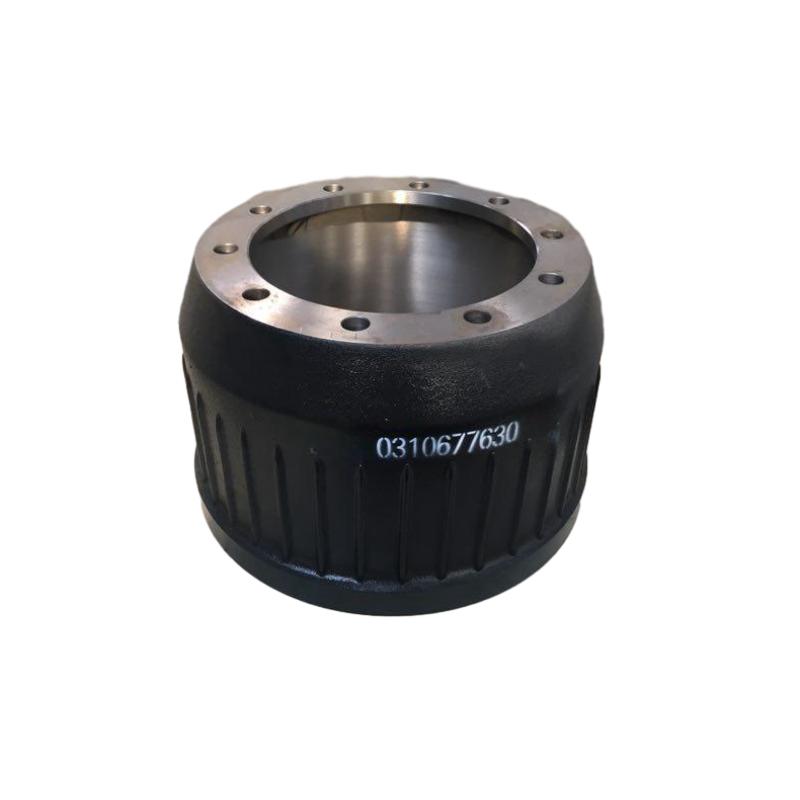
Finding the right balance between initial procurement costs and long-term operational reliability is a constant challenge for fleet managers and heavy-duty vehicle operators. When evaluating semi truck brake drum price, it is essential to look beyond the raw number and consider the total cost of ownership, which includes wear rates, heat dissipation efficiency, and the frequency of replacement. A low-cost drum that fails prematurely or causes uneven brake shoe wear can lead to significantly higher maintenance expenses and unplanned downtime.
High-performance braking systems depend on the structural integrity of the drum to withstand extreme thermal cycling. For operators using HINO series vehicles, selecting a drum with precise weight specifications and metallurgical consistency is critical for ensuring safety across diverse terrains, from the urban corridors of Dubai to the demanding roads of Russia and South Africa. This guide examines the technical factors that dictate value in the heavy-duty braking market.

The Critical Role of Metallurgy in Heavy-Duty Braking Performance
The efficiency of a drum brake system relies on the drum's ability to act as a heat sink. In semi-truck applications, the kinetic energy of a fully loaded vehicle is converted into thermal energy through friction. If the casting quality is poor, "hot spots" develop, leading to thermal cracking and warping. Professional-grade drums are engineered to maintain a uniform surface temperature, which prevents the brake shoes from glazing and ensures a consistent coefficient of friction.
Manufacturing precision is where the real value lies. Using state-of-the-art production facilities allows for tighter tolerances in the inner diameter and wall thickness. This precision ensures that the brake shoes make full contact with the drum surface, maximizing braking torque and reducing the distance required to stop. For industrial-scale operations, this technical reliability translates directly into lower insurance risks and improved driver safety.
- Thermal Stability: Resistance to deformation under high-temperature loads.
- Wear Resistance: High-density casting to extend the interval between replacements.
- Dimensional Accuracy: Ensuring perfect alignment with the axle and brake shoe assembly.

Evaluating Technical Specifications for HINO Series Brake Drums
When sourcing components for HINO vehicles, the weight of the drum is a primary indicator of its material density and heat absorption capacity. For instance, comparing models like the 43512-1193 (58kg) versus the 43512-37130 (18kg) reveals a vast difference in application. Heavier drums are typically designed for the rear axles of heavy haulage trucks where the load is greatest, while lighter versions serve specific light-duty or front-axle requirements.
The correlation between weight and performance is a key consideration for procurement. A drum that is too light for its intended application will overheat rapidly, leading to brake fade—a dangerous condition where the braking force drops off during prolonged descent. Conversely, over-specifying can add unnecessary unsprung weight to the vehicle. Understanding these specific model variations allows buyers to match the part to the exact duty cycle of their fleet.
Supply Chain Logistics and Global Procurement Considerations
For international buyers in regions such as Ecuador, Egypt, and Iran, the cost of a brake drum is influenced by more than just the manufacturing price. Logistics, packaging, and the ability of the supplier to provide consistent quality across large batches (exceeding 20,000 tons annually) are vital. A supplier with a proven global footprint reduces the risk of receiving inconsistent batches that could lead to uneven braking across a fleet of trucks.
Strategic partnerships with manufacturers who adhere to the philosophy of "Absorption Makes Profession, Profession Makes Excellence" ensure that the products are not just commodities, but engineered components. Buyers should prioritize suppliers who can offer comprehensive catalogues and technical support, as this reduces the likelihood of ordering incorrect part numbers, which is a common and costly error in the heavy-duty spare parts industry.
HINO Series Brake Drum Technical Reference
| Part Number | Approx. Weight (KG) | Application Type | Performance Grade |
|---|---|---|---|
| 43512-1193 | 58 | Heavy Duty Rear | Ultra-High Thermal |
| 43512-4100 | 55.5 | Heavy Duty Rear | High Thermal |
| 43512-1710 | 46 | Standard Duty | Balanced |
| 43512-5030 | 22 | Light Duty / Front | Standard |
| 43512-37130 | 18 | Specialized Light | Standard |
Avoiding Common Pitfalls in Brake Component Sourcing
One of the most frequent mistakes in procurement is prioritizing the lowest quote without verifying the casting method. Low-cost alternatives often use recycled scrap metal without proper refining, resulting in internal porosities. These air bubbles act as stress concentrators, which can lead to catastrophic drum failure under emergency braking conditions. Ensuring the manufacturer uses stringent quality control measures is non-negotiable for safety-critical components.
Another critical area is the "bedding-in" process. High-quality drums are machined to a surface finish that allows brake shoes to seat properly. If the surface is too smooth or too rough, the friction area will not develop uniformly, leading to "brake chatter" or vibration. Working with a manufacturer that understands the interaction between the iron drum and the friction material is essential for achieving a smooth, reliable stop.
Future Trends in Heavy-Duty Brake Drum Engineering
The industry is moving toward materials that offer higher thermal conductivity and lower weight without sacrificing strength. While traditional cast iron remains the standard for its cost-effectiveness and reliability, advancements in alloying are allowing for drums that can dissipate heat more rapidly. This is particularly important as semi-trucks increase in weight and autonomy, requiring more predictable and durable braking systems.
Moreover, the integration of precision digital mapping in the manufacturing process ensures that every drum produced is a mirror image of the original equipment manufacturer (OEM) specifications. For fleet owners, this means easier maintenance cycles and a reduction in the need for manual adjustment. The focus is shifting from simple replacement to "lifecycle management," where the drum's performance is tracked against the vehicle's total mileage.
Technical FAQ: Heavy Duty Brake Drums
What causes brake drums to crack or warp?
Cracking and warping are typically caused by extreme thermal shock. When a drum becomes excessively hot during braking and is then cooled rapidly (e.g., by driving through a deep puddle), the metal contracts unevenly, leading to stress fractures or a loss of circularity.
How do I know when to replace a semi truck brake drum?
Replacement is necessary when the inner diameter exceeds the maximum wear limit specified by the manufacturer, or if there are visible heat cracks, deep scoring, or significant ovality that causes brake pedal pulsation.
Does the weight of the brake drum affect braking distance?
Indirectly, yes. A heavier drum generally has a higher heat capacity, meaning it can absorb more energy before overheating. If a drum is too light for the load, it may suffer from brake fade, which increases the stopping distance.
Can I use a light-duty drum on a heavy-duty axle?
No. Using a drum not rated for the axle's load capacity can lead to rapid wear, overheating, and potential structural failure, posing a severe safety risk to the driver and other road users.
What is the advantage of sourcing from a specialized manufacturer like Yihang?
Specialized manufacturers provide consistent metallurgy and precision machining that generic suppliers cannot. With an annual output exceeding 20,000 tons and a focus on the JKX trademark, they ensure that every part meets rigorous performance standards.
How does the price of brake drums vary by model?
Price typically varies based on the amount of material used (weight), the complexity of the casting, and the precision of the machining required for specific axle compatibility.
Industry Technical References
- SAE International - Automotive Braking Standards
- ISO Quality Management Systems for Metal Casting
- NHTSA - Heavy Vehicle Safety Guidelines
- Commercial Vehicle Maintenance Association
Selecting the correct braking components is a critical decision for any commercial fleet. By focusing on metallurgical quality and precise model matching rather than just the initial cost, operators can ensure maximum safety and reduced long-term maintenance expenses.
Related Industry Insights



 English
 Afrikaans
 Albanian
 Amharic
 Arabic
 Armenian
 Azerbaijani
 Basque
 Belarusian
 Bengali
 Bosnian
 Bulgarian
 Catalan
 Cebuano
 Corsican
 Croatian
 Czech
 Danish
 Dutch
 Esperanto
 Estonian
 Finnish
 French
 Frisian
 Galician
 Georgian
 German
 Greek
 Gujarati
 Haitian Creole
 Hausa
 Hawaiian
 Hebrew
 Hindi
 Miao
 Hungarian
 Icelandic
 Igbo
 Indonesian
 Irish
 Italian
 Japanese
 Javanese
 Kannada
 Kazakh
 Khmer
 Rwandese
 Korean
 Kurdish
 Kyrgyz
 Lao
 Latin
 Latvian
 Lithuanian
 Luxembourgish
 Macedonian
 Malgashi
 Malay
 Malayalam
 Maltese
 Maori
 Marathi
 Mongolian
 Myanmar
 Nepali
 Norwegian
 Norwegian
 Occitan
 Pashto
 Persian
 Polish
 Portuguese
 Punjabi
 Romanian
 Russian
 Samoan
 Scottish Gaelic
 Serbian
 Sesotho
 Shona
 Sindhi
 Sinhala
 Slovak
 Slovenian
 Somali
 Spanish
 Sundanese
 Swahili
 Swedish
 Tagalog
 Tajik
 Tamil
 Tatar
 Telugu
 Thai
 Turkish
 Turkmen
 Ukrainian
 Urdu
 Uighur
 Uzbek
 Vietnamese
 Welsh
 Bantu
 Yiddish
 Yoruba
 Zulu